
During the Halloween season, some consumers went to the store and bought a bag of Reese's Peanut Putter Pumpkins. The packaging featured pictures of pumpkin-shaped Reese's peanut butter cups, with jack-o-lantern faces carved onto the front of them. Next to the image, there's a disclaimer that says, “DECORATING SUGGESTION.” The packaging looks like this:
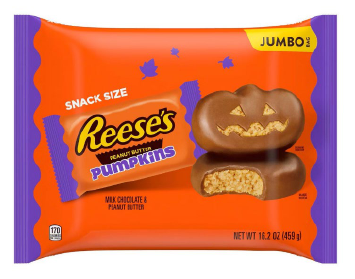
When the consumers opened the package, however, the product didn't have carved faces. Instead, the product looked like this:
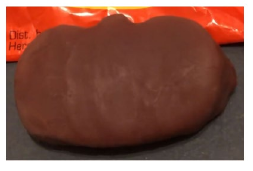
The consumers sued for false advertising, alleging that Hershey misled consumers about what the product actually looks like. As the court explained, the plaintiffs alleged that “Hersey represented that its Reese's Peanut Butter Pumpkins product had explicit carved-out artistic designs of a mouth and eyes on their surface when there are no such carved designs on the actual chocolate products."
Last year – right before Halloween – a federal court in Florida dismissed the case on the grounds that the consumer lacked standing to sue. The court wrote, “Plaintiffs' conclusory allegations as to why they have allegedly been deprived of the benefit of their bargain all boil down to their subjective, personal expectations of how the products would or should have looked when unpackaged. This is not enough to plausibly allege a concrete economic injury for purposes of Article III standing.”
The plaintiffs filed an amended complaint, and the court just dismissed the case again, holding, essentially, that the plaintiffs hadn't sufficiently alleged that they were injured by the fact that the packaging didn't accurately portray what the product looked like.
What may come as a surprise to lawyers advising their clients about advertising issues, the court wasn't at all interested in the fact that the product looked quite different than what was shown on the packaging. The court wrote, “it is clear that their only injury is their subjective disappointment. Even if they had some such novelty expectations when buying these products, Plaintiffs do not allege that the Hershey's Reese's Peanut Butter Pumpkins that they purchased were defective or worthless or that they lost all economic value because of the absence of the decorative carvings.”
What's the takeaway here?
Most importantly, for consumers, if you're giving away Halloween treats this year based on what the product looks like on the packaging, you'd better open it up first to make sure you're getting what you paid for.
For advertising lawyers, certainly the basic rule is still that product demonstrations should be real and should accurately depict what the product is and what the generally expected performance will be. This case recognizes, however, that not all inaccuracies are necessary actionable, particularly when consumers can't show that they suffered actual economic harm.
Vidal v. The Hershey Company, 2026 WL 2730302 (S.D. Fla. 2026).
/Passle/5a0ef6743d9476135040a30c/MediaLibrary/Images/2026-10-10-11-51-43-350-6aca26cf8b2b8247488928de.png)

/Passle/5a0ef6743d9476135040a30c/MediaLibrary/Images/2026-10-07-19-09-59-366-6ac69907d24614eebff93c9f.jpg)
/Passle/5a0ef6743d9476135040a30c/SearchServiceImages/2026-09-25-18-59-25-213-6ab6c48d946b38ce807ecc26.jpg)


