If you were at the ANA Masters of Advertising Law Conference in Huntington Beach this week, one theme kept coming up: pricing is a major FTC priority. The Commission's new lawsuit against Dollar General, filed a week before the conference, shows what that looks like in practice.
On October 26, the FTC and 20 states sued Dollar General in the Middle District of Tennessee alleging that the retailer routinely charged customers more at the register than the prices on its shelves, price tags, and ads. Dollar General denies the allegations. In a public statement, the company said its goal is “100% accuracy between shelf and register prices in every store,” while acknowledging that “occasional price discrepancies can occur.” It also said it cooperated with the FTC’s investigation, made a counteroffer for a monetary settlement before the suit was filed, and will defend the case vigorously.
Dollar General calls itself “America’s neighborhood general store.” The complaint notes that roughly 80% of its stores are in towns of 20,000 or fewer people, and that about 75% of the U.S. population lives within five miles of one. Households earning $35,000 or less account for 60% of its revenue, and it sells around 2,000 items for $1 or less.
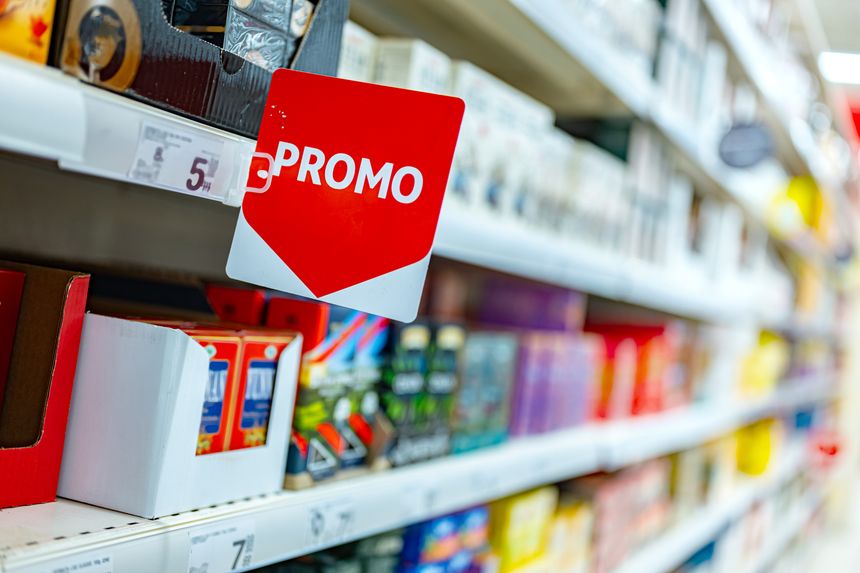
According to the complaint, the overcharges show up in every place Dollar General advertises a price: weekly circulars, in-store shelf tags and promotional signs, and its own app and website. The pleading quotes dozens of consumer complaints. In one, Twinkies with a $2.50 shelf price rang up at $3.50. In another, eggs tagged at $3.25 rang up at $4.50. Others involve “buy one, get one” and multi-buy deals from the circular that never came off at the register, and sale signs left up after the sale had ended.
The FTC also did its own testing. Between January and April 2026, investigators made undercover purchases at Dollar General stores in Ohio, Missouri, Pennsylvania, and Maryland. The complaint alleges that every one of those buys resulted in overcharges, with error rates ranging from 8.5% in Baltimore to 22.4% in Cleveland. In one store, the running list of items and prices at checkout faced only the employee, so the shopper couldn't easily check what they were being charged.
State inspections tell a similar story. Most states use a NIST price-verification procedure under which a store fails if more than 2% of sampled items are mispriced. The complaint alleges that Dollar General failed more than 39% of inspections in Kansas, 53% of inspections in New Mexico in early 2026, and more than 45% in Utah, where one store failed ten inspections in a row. Dollar General also logged at least 29,265 complaints categorized as “Did Not Honor Marked Price” between January 2023 and March 2026, from all 48 states where it operates.
The complaint also explains how the FTC says this happens. Dollar General changes prices weekly, and those changes are usually increases. The register updates right away, but stores are supposed to swap out the shelf tags during a weekly five-hour “Compliance Tuesday” shift. According to the FTC, thinly staffed stores often don’t get it done, so the shelf shows the old, lower price while the register charges the new one. The complaint even cites a press report of a former employee who said she sometimes threw away new price tags.
Legally, the FTC’s theory is simple. It says Dollar General represented that consumers would pay the advertised price, consumers paid more, and that is deception under Section 5. But the FTC also adds a Gramm-Leach-Bliley Act count. Its theory there is that the false price representations were used to get consumers’ card and bank account information at checkout. The FTC has used this approach before, including in its Greystar case, and it’s worth watching because GLB claims open the door to consumer redress as though a trade regulation rule had been violated. The FTC is seeking a permanent injunction, monetary relief, and civil penalties, and each state brings its own claims under its consumer protection and weights and measures laws.
This case is about as kitchen-table as it gets. In announcing the suit, BCP Director Christopher Mufarrige said Dollar General had harmed “communities and consumers who are already struggling to make their paychecks last.” He also tied the case to “the agency’s commitment to lowering costs for consumers.”
None of this is new messaging. At the NAD conference last year, Commissioner Meador said the agency would focus on “kitchen table issues,” meaning everyday economic issues that hit family budgets. Mufarrige made the same point to ANA members in May. He said the Commission is focused on “affordable goods, services, and housing,” and he listed the agency’s price transparency cases on tickets, cars, prescription drugs, rental housing, and groceries as proof that it is “working hard to ensure affordability.” He also offered an easy test for pricing cases: “The company represented the price as X, and it turned out the real price consumers had to pay was more than X.”
Pricing is clearly on the FTC’s mind beyond shelf tags, too. Personalized pricing, the use of personal data to set what different consumers pay, is another topic the agency is focused on, as our colleague Andrew Folks recently wrote.
The part of the complaint that should get in-house counsel’s attention is the “knew and didn’t fix it” narrative. The FTC leans on Dollar General’s own audits and reports, failed state inspections, past settlements, and press coverage to argue that the company knew about the problem and didn’t fix it. Since 2019, the company has entered into seven settlements with six state Attorneys General and consumer protection agencies over pricing accuracy, paying more than $6 million. It has also faced eight class actions since 2022. The complaint says a December 2025 article in The Guardian about dollar store overcharges prompted significant internal discussion, including at the CEO level.
That matches what Mufarrige told ANA in May. He said consumer protection problems often arise “when problems are identified and then ignored.” When a company’s own analysis shows consumers aren’t making informed decisions, he said, “that is a consumer protection problem and we expect good corporate citizens to remedy that problem.”
A few practical takeaways for companies here:
- Make sure your price claims in advertising, online, shelf tags, and promotional signs match what you actually charge at checkout.
- Treat internal pricing audits and complaint trends as legal risk signals, not just operational metrics.
- Make sure the register honors the conditions on your offers.
Shelf-price and checkout-price discrepancies have traditionally been the province of state and local weights-and-measures authorities. The Dollar General case shows that these issues are no longer just a matter of local enforcement. With 20 states joining the FTC, brands should expect federal and state regulators to work together on everyday pricing practices, not just higher-profile issues like hidden fees and subscriptions. The case also shows how seemingly small discrepancies, repeated across thousands of stores and left uncorrected for years, can become the basis for a major federal enforcement action.